
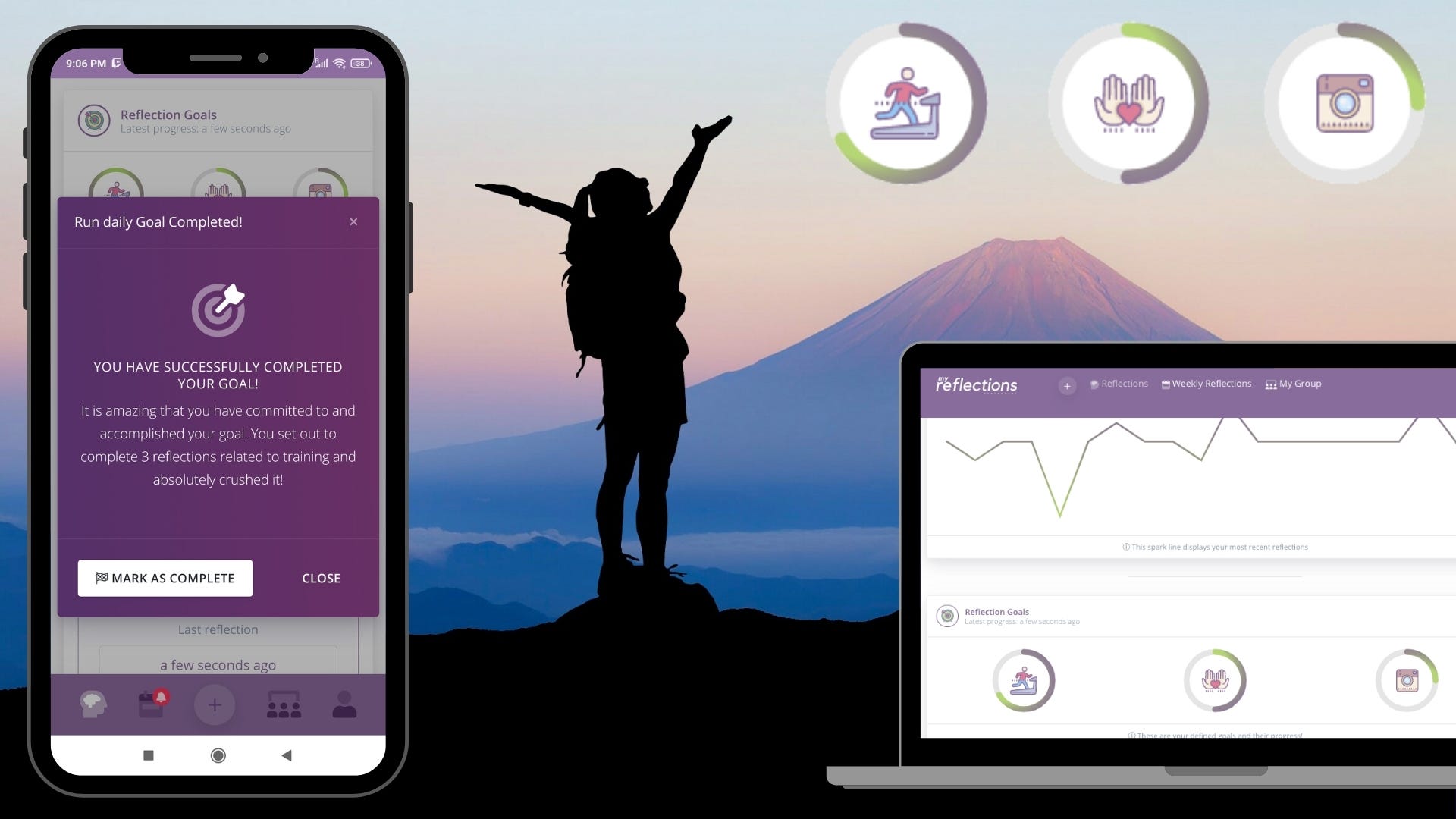
What this is about
If you aim at nothing, you will hit it every time.” -Zig Ziglar
Understanding where we are going gives us a sense of purpose, a direction and a focus that sets us up for success. This is best achieved through setting the setting of goals and objectives. In fact, research indicates that people who set goals are “10 times more successful” than those who fail to do so. What is a little frustrating to think about though, is that only 17% of people actually set goals and of those only 3% actually write them down or capture them in a way that helps them to monitor their progress or keep themselves accountable. That means that 83% per cent of people have no discernable goals and hindering themselves in their personal and professional lives.
Further, we know that people who have effective self-reflection habits become more self-aware and increase their speed of self-improvement through the extraction of learnings from their decisions, their outcomes and understanding what we call highlights and lowlights. This empowers us to make adjustments and learn faster how to behave and make the best decisions in common situations that we find ourselves in.
That is exactly why defining and committing ourselves to goals and using structured self-reflection in parallel is an approach that will allow you to see better results faster, regardless of the type of goals you have.
I have created a flowchart to highlight how goals and reflection can work hand-in-hand to help you achieve your goals;
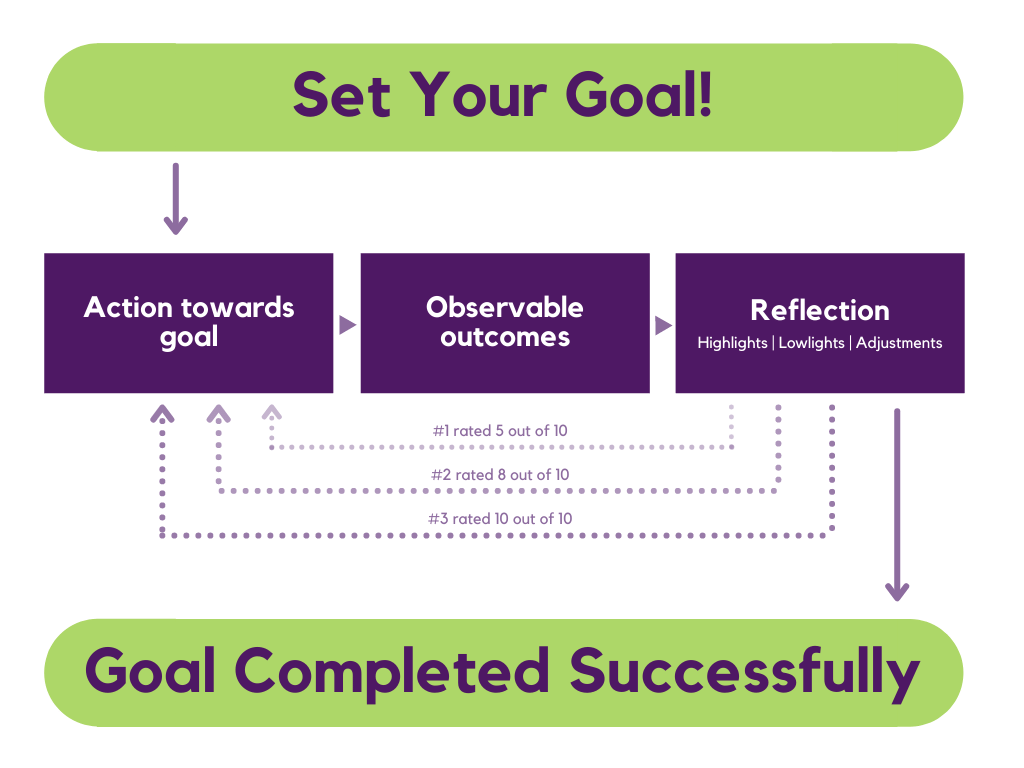
We need to start by setting a goal, it could be related to a project, our wellness or tasks and as we take action towards the completion of our goal we have opportunities to reflect and evaluate the observable outcomes. If we were to rate the outcomes of each action; we can see in the above flowchart that through reflection we can improve the outcomes by making adjustments to our decisions and actions resulting in better results and/or reductions in the time taken to successfully complete the goal.
Have you bought into this concept yet? I hope so because I am excited!
What is great is that My Reflections helps you manage all of this: and it is really simple to get started. You can now set and manage up to three active goals as part of your reflection journey. We specifically chose to limit the number of goals to three to ensure that you are focused on your top three priorities and not overloading yourself.
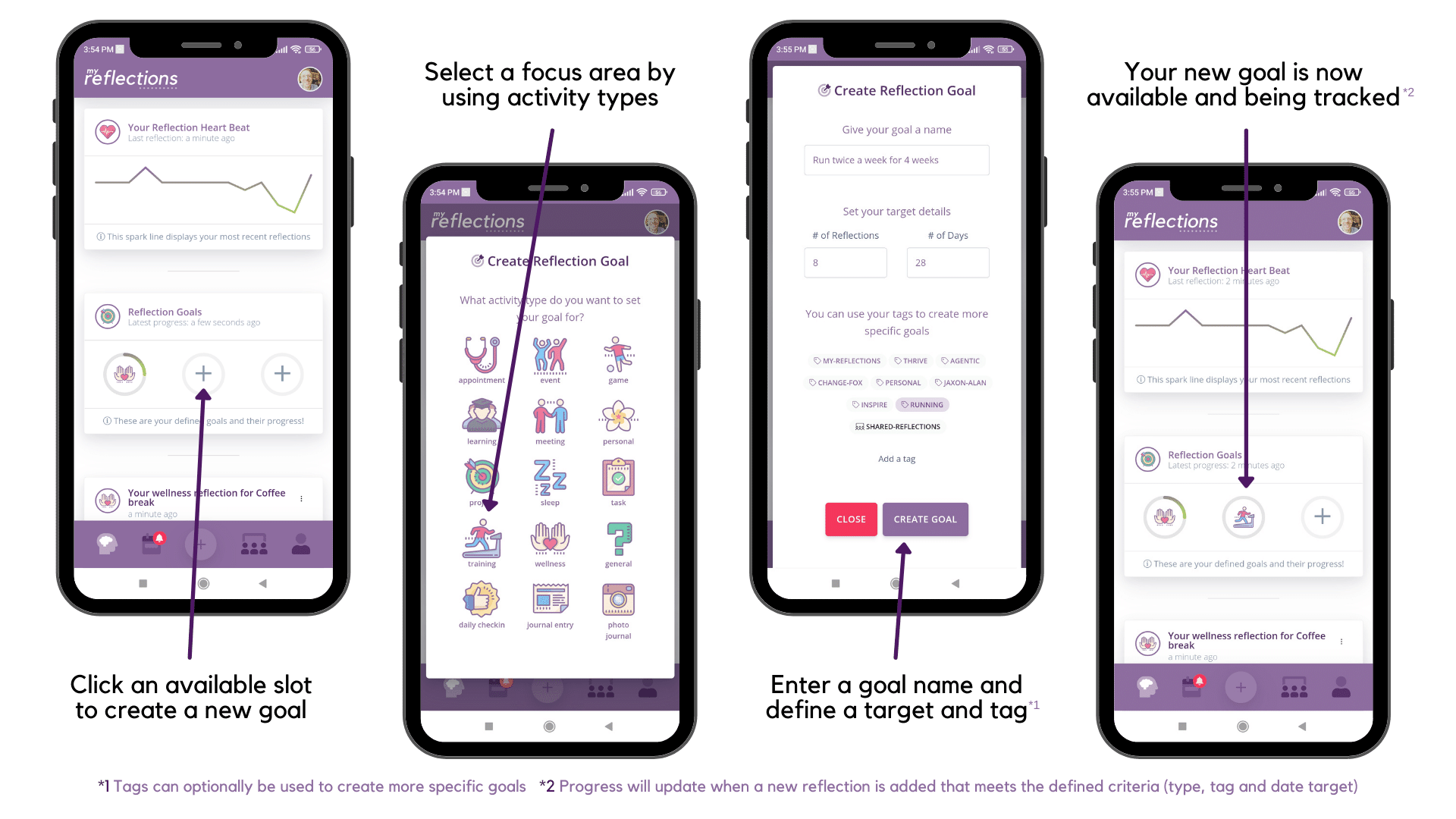
When you load My Reflections; you will now see a “Reflection Goals” panel on your Reflect Now feed. This will contain either your progress towards active goals or up to three “call to action” buttons to create a new goal.
As above; you nominate the focus area for your goal by selecting an activity type, just like you do with logging a reflection within My Reflections. For each goal you provide a name (in the above I want to run twice a week for 4 weeks); set your target number of reflections which are representative of the number of actions and/or reflections that will be needed to complete a goal: if you’re unsure-make an educated guess! Set yourself a timeframe, defined by a number of days and lastly if you wanted to get very specific; you can create or select an existing tag.
Progress is achieved against each goal when a new reflection is added that matches the activity type and tag (if selected) and is within the timeframe you have nominated.
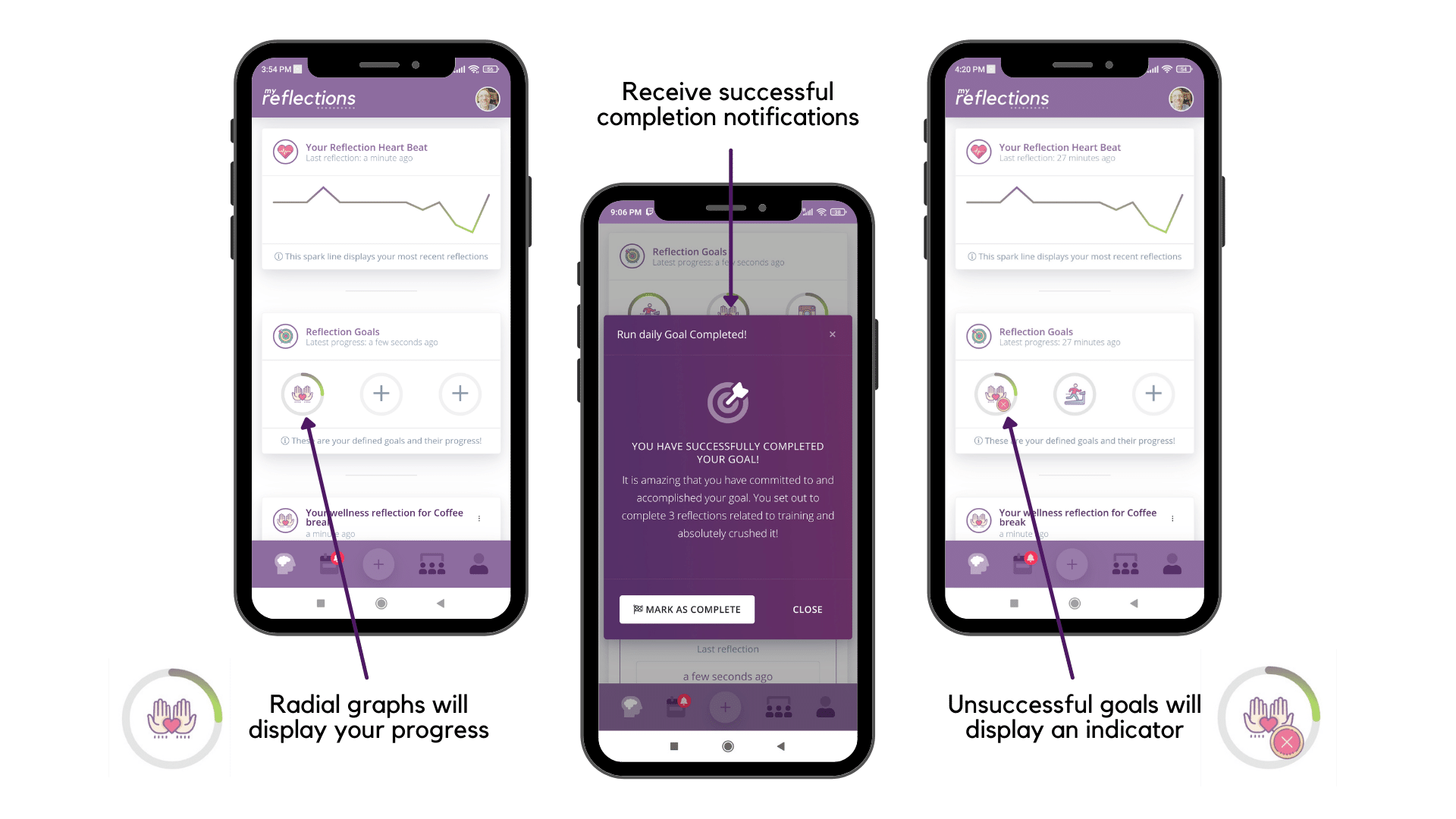
In saying this, this process for using self-reflections to be more successful with your set goals but you could equally use goals to improve your self-reflection habits initially. In this case, you would choose the activity types that you would like to start with and set a goal of 30 reflections in 30 days: as we know that developing habits take time and this is a great way to monitor your own progress.
Reflection goals will be free to use for all My Reflections users so get in and give it try and see how much it can improve your areas of focus.
Try the two-minute version tonight.
Reflecting is free, on iPhone, Android and the web. Professional has a 7-day trial.
Get the appKeep reading

Reflection practice
Two minutes on the plane
Write when the evening is real, not when the network is. Offline queue and sync keep the two-minute habit intact.

Reflection practice
Reading tone across a month of decisions
Sentiment is a mirror on how you wrote the month, not a score to game. Pair it with the reflections underneath.