

Why it matters
Understanding the self-reflection model to improve our self-awareness and develop reflection habits
To answer that question, we first need to explore what self-reflection is and how it shapes us as people.
Self-reflection is not just a buzz-word, it is not just an aspect of “health & wellness”, it is even more than a method of improving yourself. Self-reflection is a field of psychological, social and human studies that have inspired academic papers, models and principles describing and attempting to demonstrate links between self-reflection and core concepts of identity and “self-concept development” that tightly links this development with self meaning.
Even as far back as the mid-1900s, influential thinkers such as Erikson (1963), Frankl (1969), and Bruner (1990), have all discussed and strongly suggested that “sense of meaning” plays a fundamental role in “self and identity development”. Further, an equally significant emphasis has been placed on the relationship between “self and identify development”, “sense of meaning” and “trait self-awareness”.
What does that mean? In short, they suggest that when you have a sense of meaning, you are more likely to develop a strong self-awareness; and when you are developing that self-awareness, you are more likely to be self-aware and therefore engage in self-reflection; which leads to a higher sense of meaningfulness: It feels like we’re going in circles, and we are basically! Essentially, self-awareness leads to meaning, which leads to more effective self-reflection and so on and so on.
One proposed model that can help to make sense of this is the “Self Reflection Model”: as discussed by Dishon, Oldmeadow, Critchley and Kaufman in their published paper from 2017, “The Effect of Trait Self-Awareness, Self-Reflection, and Perceptions of Choice Meaningfulness on Indicators of Social Identity within a Decision-Making Context”. They suggest that the proposed model “articulates how self-reflection and perceptions of meaningfulness might affect the self within a choice context” (read more about it here)
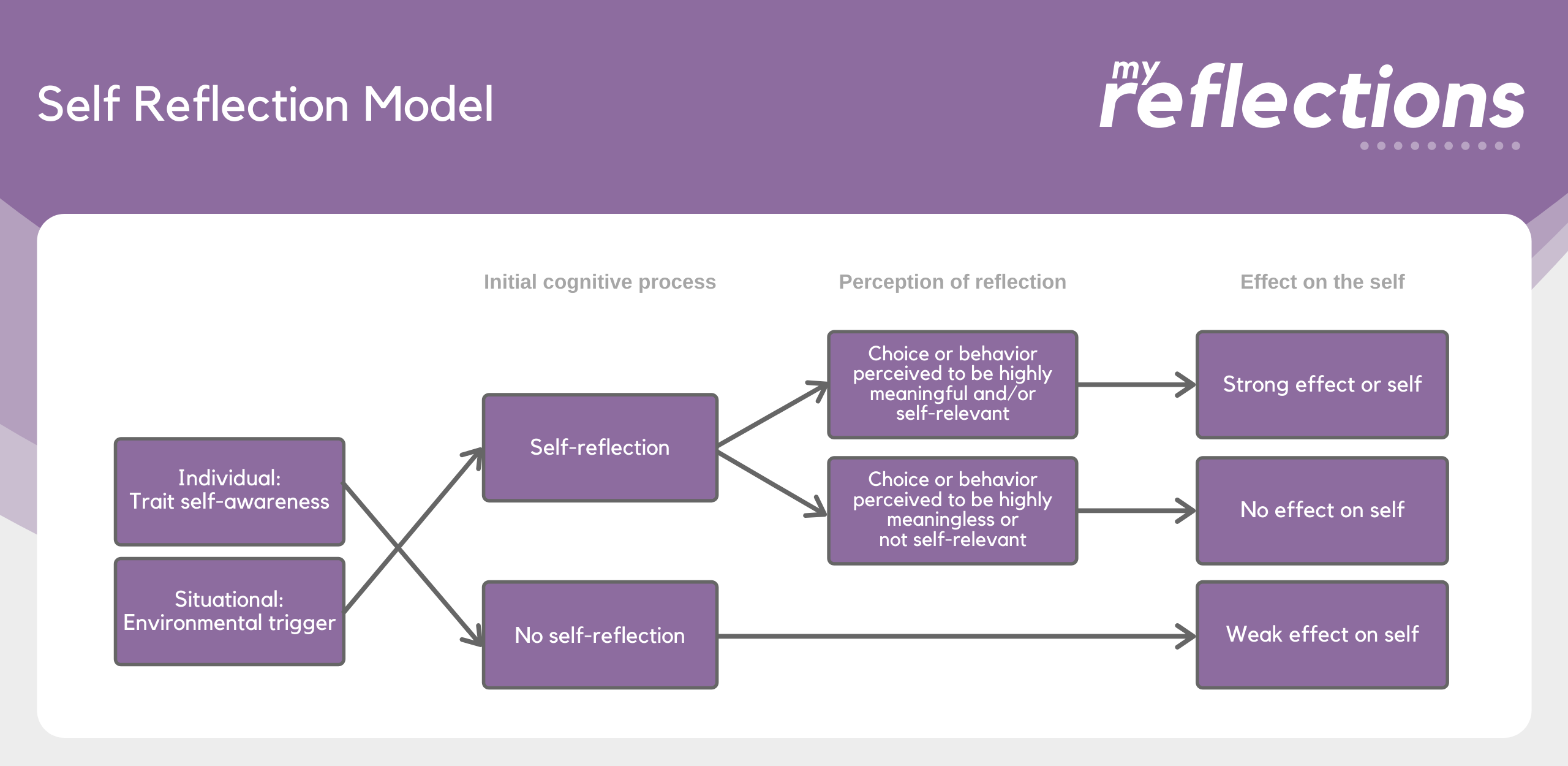
Essentially the study concluded that the model largely supported their hypothesis and there are several takeaways that we can take from this paper.
- Those of us who are more self-aware are in less need to be prompted to reflect on situational and individual triggers. That is, we are more likely to build reflection habits because it has been an integral part of the development of who we are, our self;
- Those of us who are less self-aware requires consistent prompts to reflect on situational and individual triggers. That is, we are less likely to seek to learn from our lessons unless prompted to do so;
- Interestingly, those of us who are less self-aware can, with the use of social identity theory; associate ourselves with people who either wish to develop their self-reflection habits or who are highly self-aware, as per item 1, and we will be prompted by others actions more effectively.
Let us return to the question this article was trying to answer, why does self-reflection not come naturally to all of us? Well partly, the research indicates that some people are just more likely to be self-aware and therefore engage, without being prompted, to reflect on our decision and actions. That is not to say that if we lack those traits we can’t develop them, and in fact, the evidence indicates that the act of prompted self-reflection will increase self-awareness and lead to unprompted reflection in the future; that is, you can build reflection habits by getting started!
So what next? Well, that largely depends on your own levels of self-awareness apparently but either way, I strongly suggest that you start or continue your reflection journey in a way that will ensure more effective outcomes to power-up your levels of self-awareness.
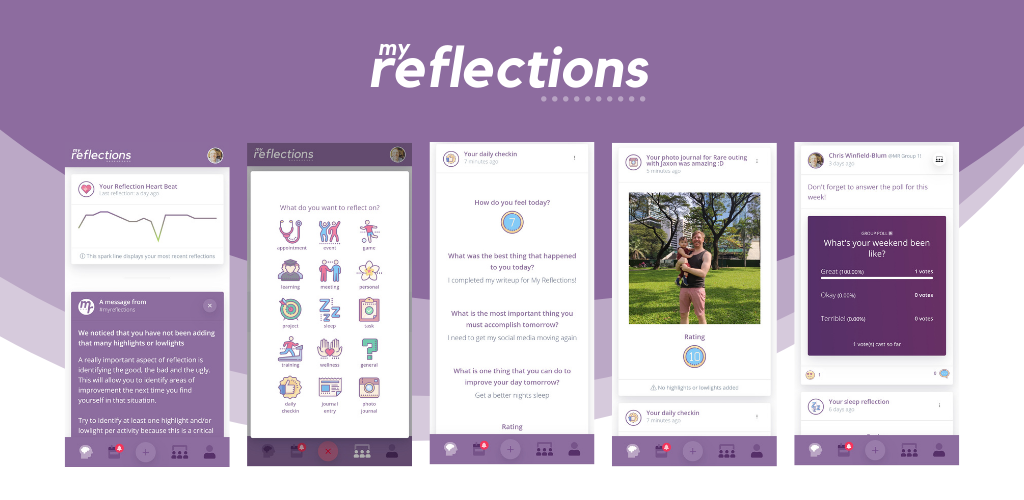
My Reflections is a great place to start of course! It’s free to get started and will help you to realise the many benefits of self-reflection! You can even create groups of like-minded people and reflect as a group, effectively being prompted to reflect by those you are in a social group with. Get started today!
Try the two-minute version tonight.
Reflecting is free, on iPhone, Android and the web. Professional has a 7-day trial.
Get the appKeep reading

Reflection practice
Two minutes on the plane
Write when the evening is real, not when the network is. Offline queue and sync keep the two-minute habit intact.
Reflection practice
Reading tone across a month of decisions
Sentiment is a mirror on how you wrote the month, not a score to game. Pair it with the reflections underneath.