

As awareness increases in the importance of positive mental health; it gives us an opportunity to discuss and find approaches to reduce stress, anxiety, and other mental health triggers in our personal and professional lives! An important aspect of this how effective our self-reflection habits are.
The 10th of October is World Mental Health Day, an initiative “with the overall objective of raising awareness of mental health issues around the world and mobilizing efforts in support of mental health”.
In this article, I will discuss three ways that personal and professional reflection can improve your mental health and how to get started!
1. Better decision making
There have been a number of studies exploring the impact that reflection has on effective decision making. The research is very consistent in their findings that reflection plays an important part in our ability to improve our decision-making processes when we find ourselves in similar situations.
Simply put, when we reflect on past decisions and their outcomes, we improve future decisions when in the same situation. This makes sense; we are more experienced, we’ve seen it before and we know what worked and did not work previously.
This can significantly reduce the amount of anxiety and stress that you feel while placed in similar situations.
2. Higher levels of confidence
Through the process of reflection, we are able to confirm our decisions were effective, and where they could be improved on; and that we have identified and formed plans for the next time we are put in that situation.
Knowing that you have plans in your toolbox for future use leads to higher levels of self-confidence, reducing stress and any uncertainty that you may feel when in foreign or high-pressure situations.
3. Reduced dwelling
Research out of the UK determined that dwelling or “brooding too much on negative events is the biggest predictor of depression and anxiety and determines the level of stress people experience”. The extent that dwelling impacted mental health took psychologists by surprise.
We found that people who didn’t ruminate or blame themselves for their difficulties had much lower levels of depression and anxiety, even if they’d experienced many negative events in their lives,” says Peter Kinderman, who led the study and is a professor of clinical psychology at the University of Liverpool
As we have discussed already, reflection, when used effectively, can be a great tool to help you learn from your decisions and their outcomes, enabling you to “move on” and leave possibly negative situations behind as a “lessons learned”.
Having effective reflection habits encourages you to move on from negative situations in a positive way because dwelling on previous situations you have found yourself does nothing to correct or improve the outcomes; so it is important to be able to take every ounce of feedback from the situation and develop a strategy to ensure that if you find yourself in a similar situation, you will act effectively.
How My Reflections helps
My Reflections supports the development of reflection habits so that you can take control of your personal & professional development, and make the most out of your experiences. Core reflections are free. Professional unlocks photo journals, groups you create, and schedules.
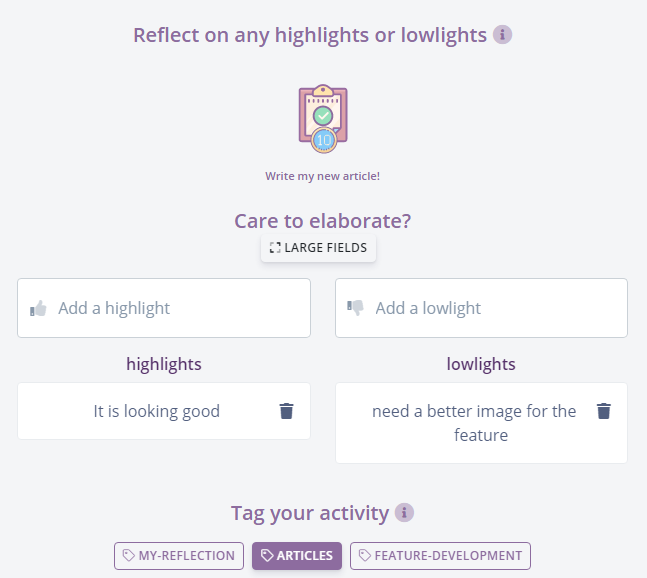
You start your reflection journey by tracking activities throughout the day, rating your performance or feelings towards this activity between 1-10.
As the benefits of reflection increase the closer to the activity, you can provide highlights and lowlights for the activity; giving you a snapshot to trigger emotion and memories for subsequent deeper reflection.
You can also build your own tags to help you categorise and group your activities to suit your own needs and requirements. For example; you may add a task for each project that you’re actively working on; you may categorise your appointments by type, doctor, dentist, etc.
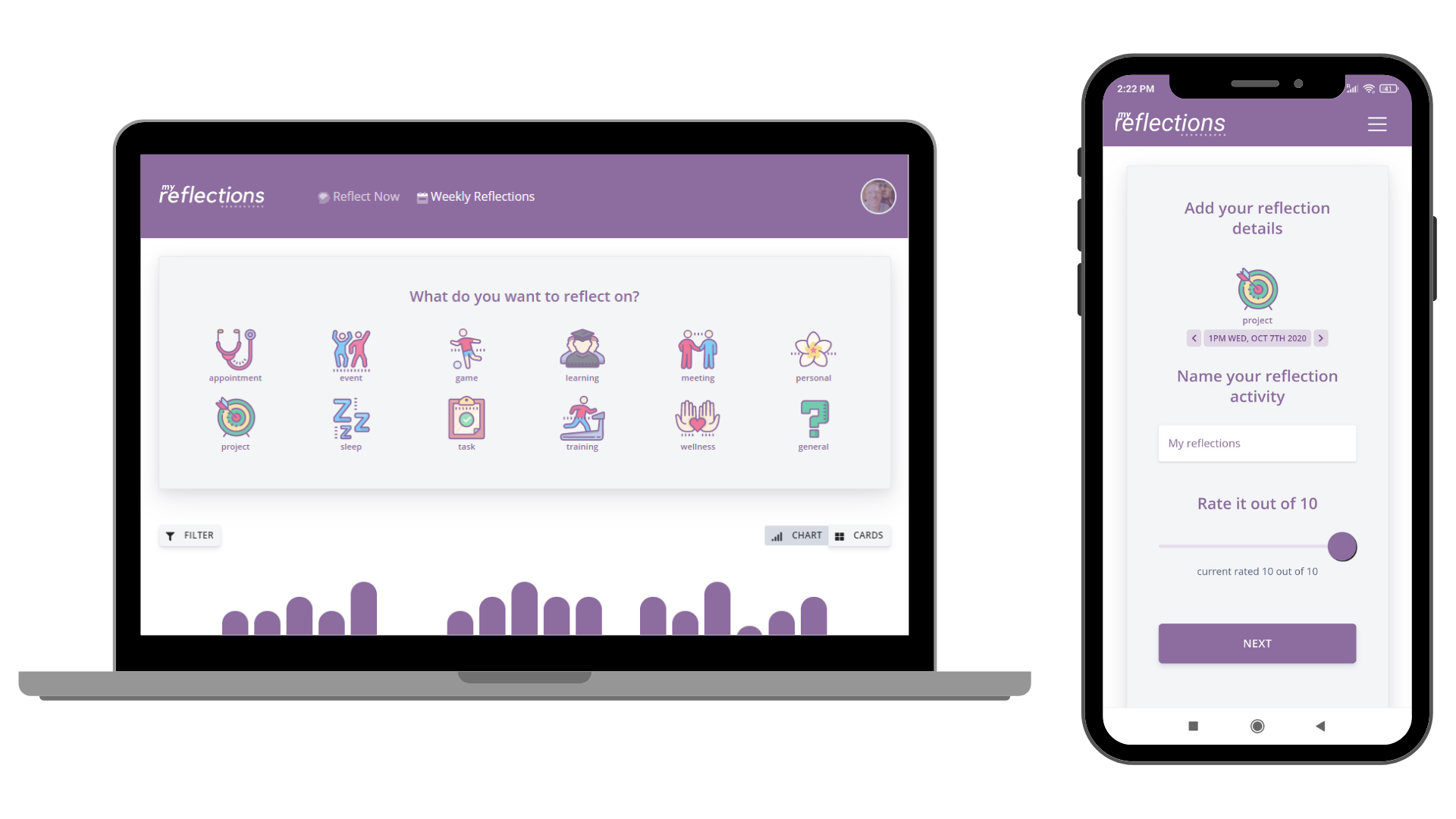
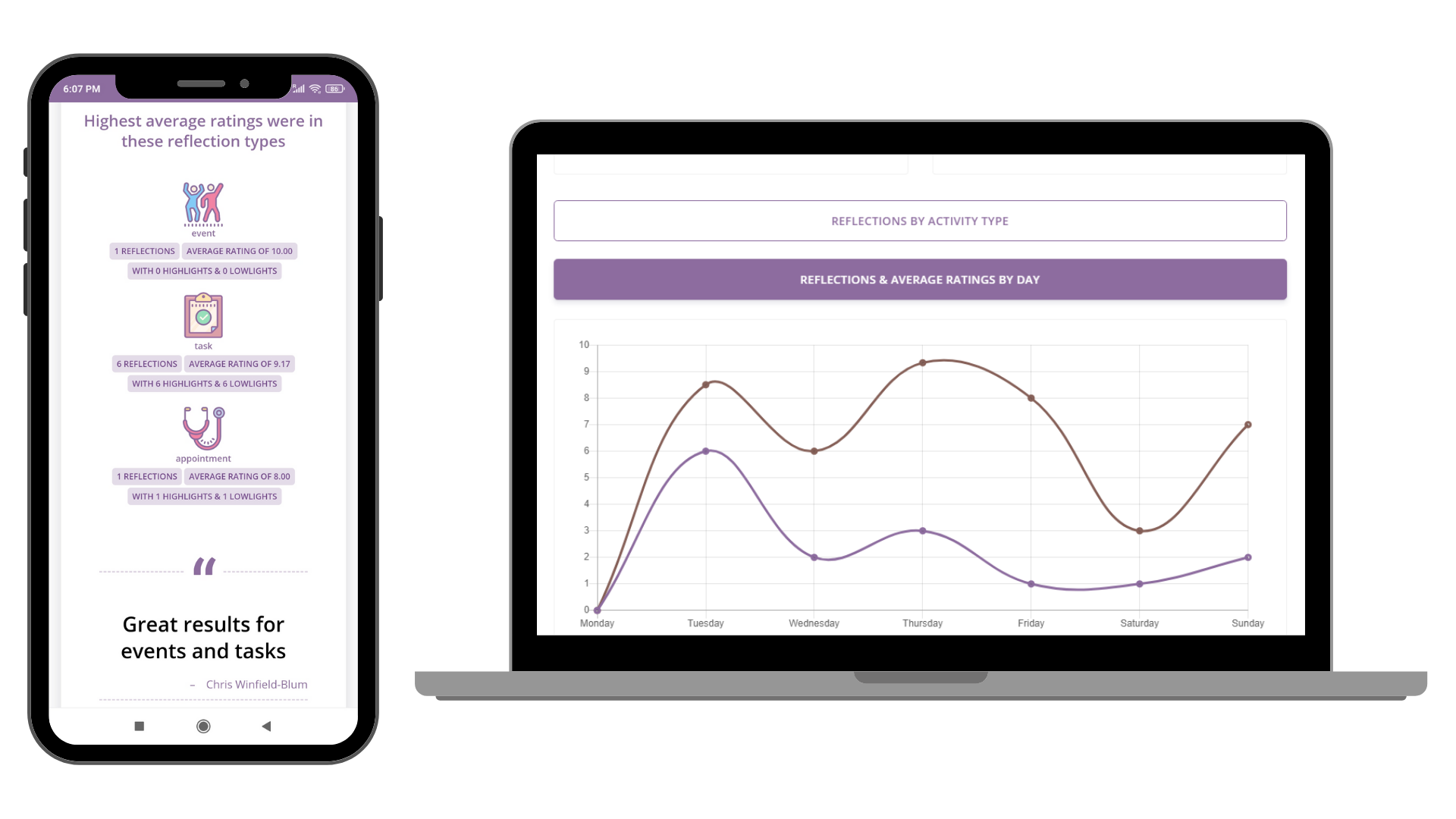
So far, so good! When you are ready to look back, open a deep dive: charts for ratings, activity types and tone, with every figure opening the reflections underneath.
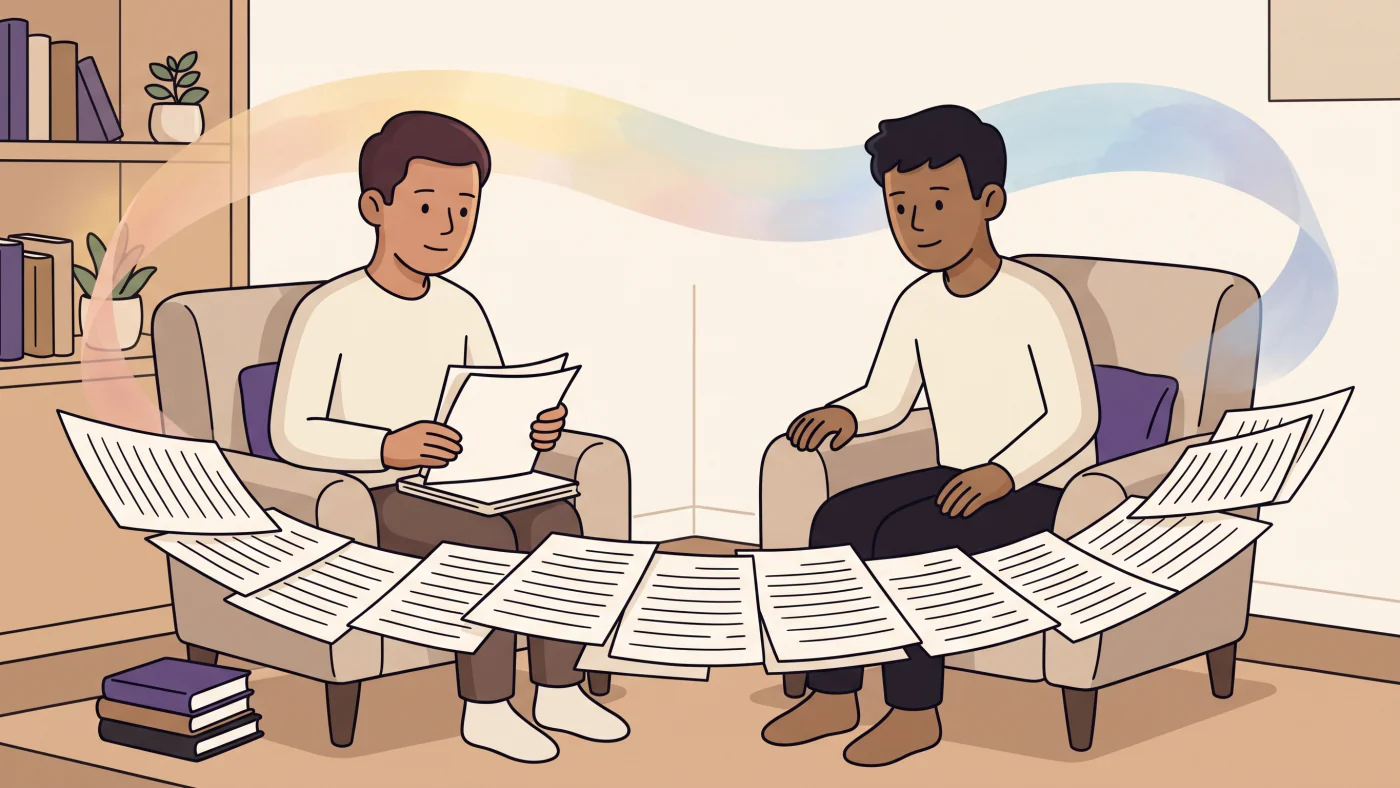
When it helps the conversation, share a single reflection or a deep dive link. Everything else stays private by default.
Try the two-minute version tonight.
Reflecting is free, on iPhone, Android and the web. Professional has a 7-day trial.
Get the appKeep reading

Reflection practice
Two minutes on the plane
Write when the evening is real, not when the network is. Offline queue and sync keep the two-minute habit intact.
Reflection practice
Reading tone across a month of decisions
Sentiment is a mirror on how you wrote the month, not a score to game. Pair it with the reflections underneath.