

A 4 after a difficult meeting is one day. An 8 on Friday is one day. Either number can fill the afternoon if you let it. The useful question is whether those days belong to a run.
The line on Today and Insights already shows how your ratings have moved (here’s how Today and Insights work). Version 3.0.3 reads that line against your own usual. It marks a run of higher days, or a run of lower days, when they sit together.
A single day stays on the line and off the mark. A flat run of the same rating stays unmarked, including a long row of eights. The comparison is with your own history. No one else’s ratings come into it.
You will see it on iPhone and Android, and in the web app. It is part of Today and Insights on Free and on Professional.
What’s in 3.0.3
- A 30-day rating line that marks a higher or lower run, compared with your own usual over the last 90 days.
- Names in plain language: a few low days or a few strong days, a lower or stronger week, a lower or stronger stretch.
- One prompt on Today when that run is recent. Write about it, or dismiss it. Either way, the prompt stays quiet for 14 days.
- The same mark on Insights. Open it for the dates, how many days, and your usual.
- On Free and Professional. iPhone, Android, and the web app.
Your own usual
The chart is the last 30 days. Each point is that day’s rating. If you rated more than once, the point is the average. A day with no rating is a gap. It is not treated as a zero.
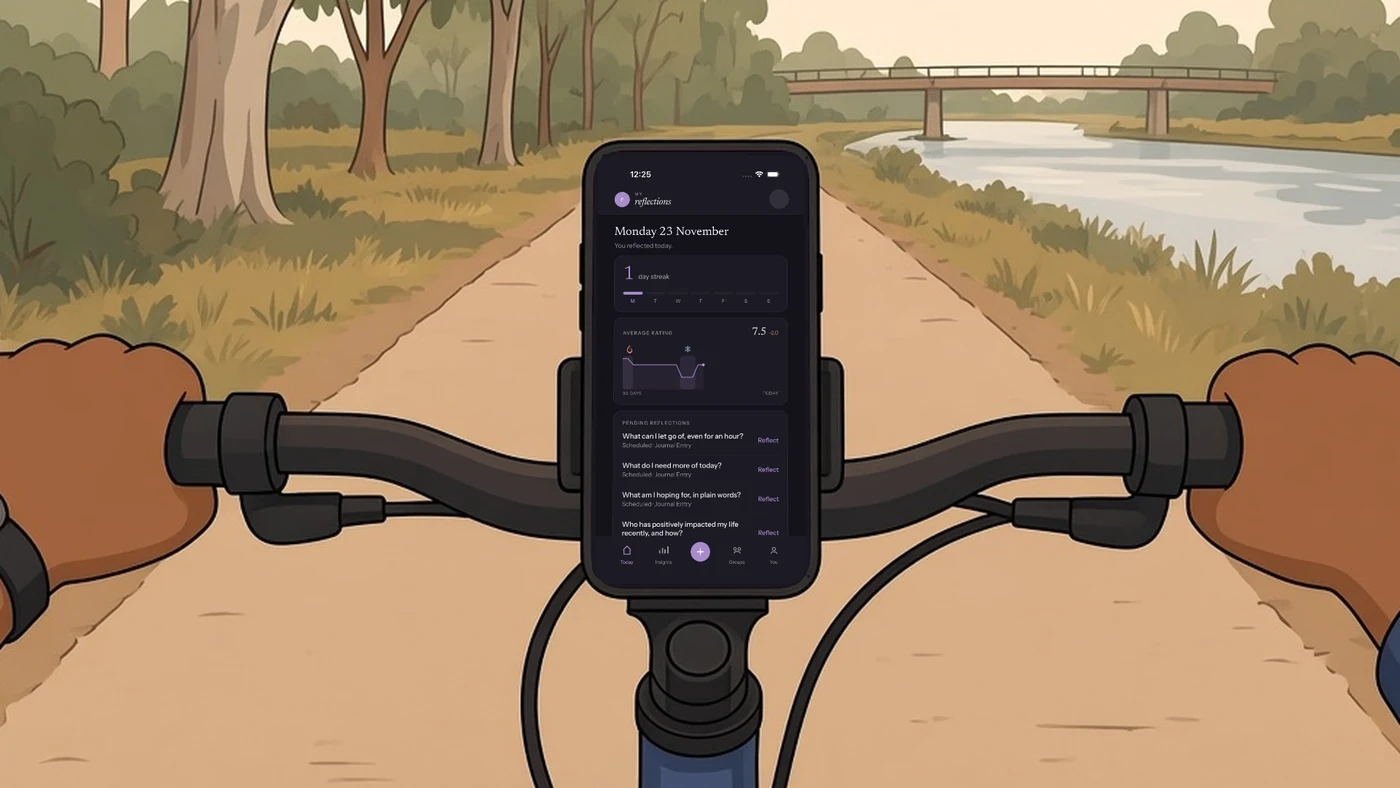
Your usual comes from the last 90 days of ratings you gave. The app waits until 14 of those days have a rating before it will name a stretch. The line can appear earlier. The mark waits.
A day counts when it sits clearly away from that usual, and away from how much your ratings normally move. If your days already swing, a mild change stays unmarked. If your days barely move, a real step stands out. A flat streak of eights is your usual. It is not a stronger stretch.
When the app checks a possible run, it sets your usual from the other days, so a stretch is never measured against itself.
It uses the ratings on your reflections, including a group ask you answered, because those ratings are yours. It does not read anyone else’s journal.
What gets a mark
One deep day is not a stretch. The app is looking for a run.
That is three or more unusual days in the same direction within a week, or two days in a row that each sit about two points or more off your usual. An unusual day is about a point and a half from your usual, and out of step with your normal range.
The name follows the length of the run, in calendar days from the first marked day to the last:
- Up to four days: A few low days, or A few strong days
- Five to nine days: A lower week, or A stronger week
- Longer than that: A lower stretch, or A stronger stretch
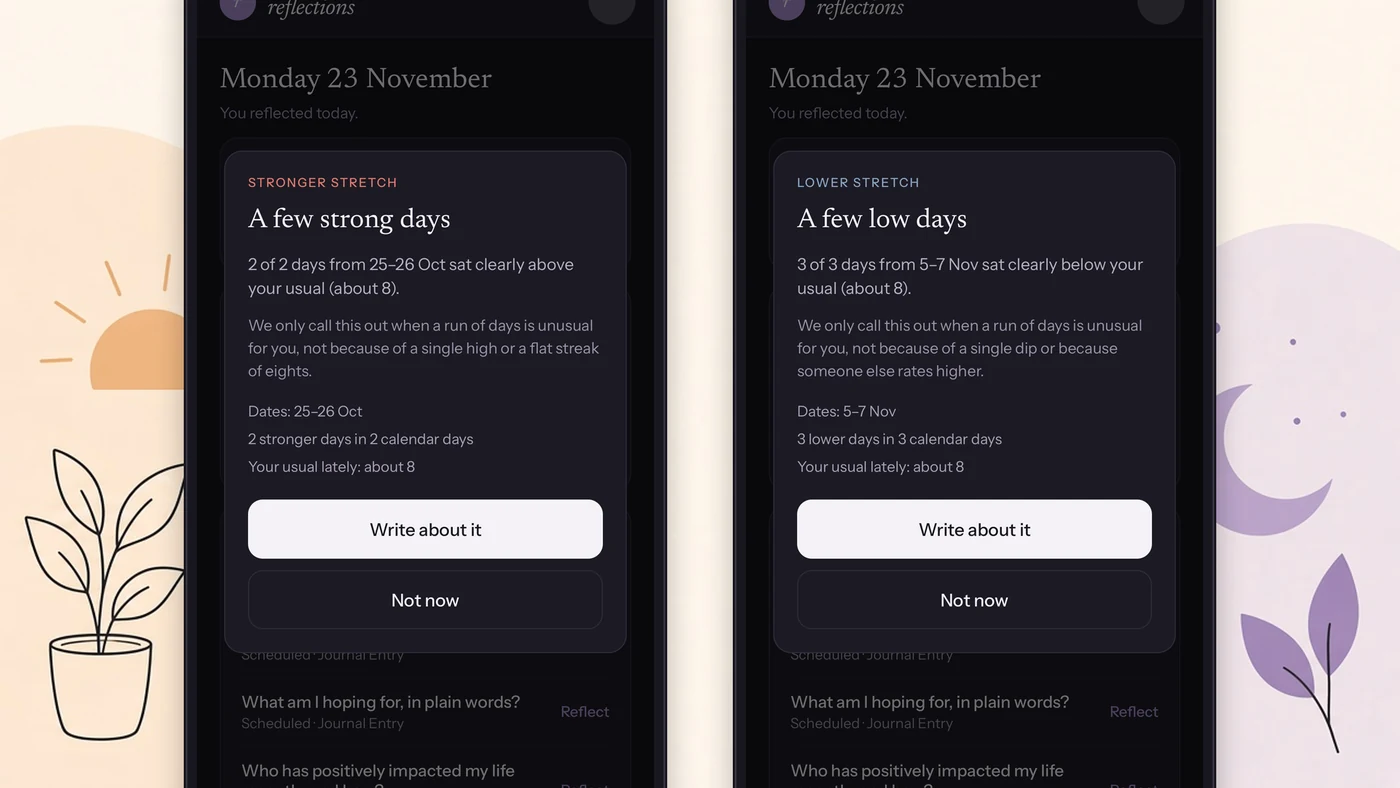
The sentence under the chart says how many of those days were actually higher or lower, and about what your usual has been. Ordinary days can sit in the middle of the run. The count is the unusual days, not every square on the calendar.
This is the rating, from 1 to 10. Highlights, lowlights, and adjustments are still optional notes on a single reflection. They are a separate part of capture.
The prompt on Today
Today offers at most one of these. The run has to be recent: it ended within the last 7 days. Older marks in the 30 days stay on the chart. They do not get a card.
The card uses the same name as the mark. A lower run asks if you want to write about what has been different. A stronger run asks if you want to write about what has been working.
Write about it opens a journal entry with the question already set. A lower run asks what made these days feel heavier than usual. A stronger run asks what has been working across those days. You still rate the moment and write the note, the same as any other reflection.
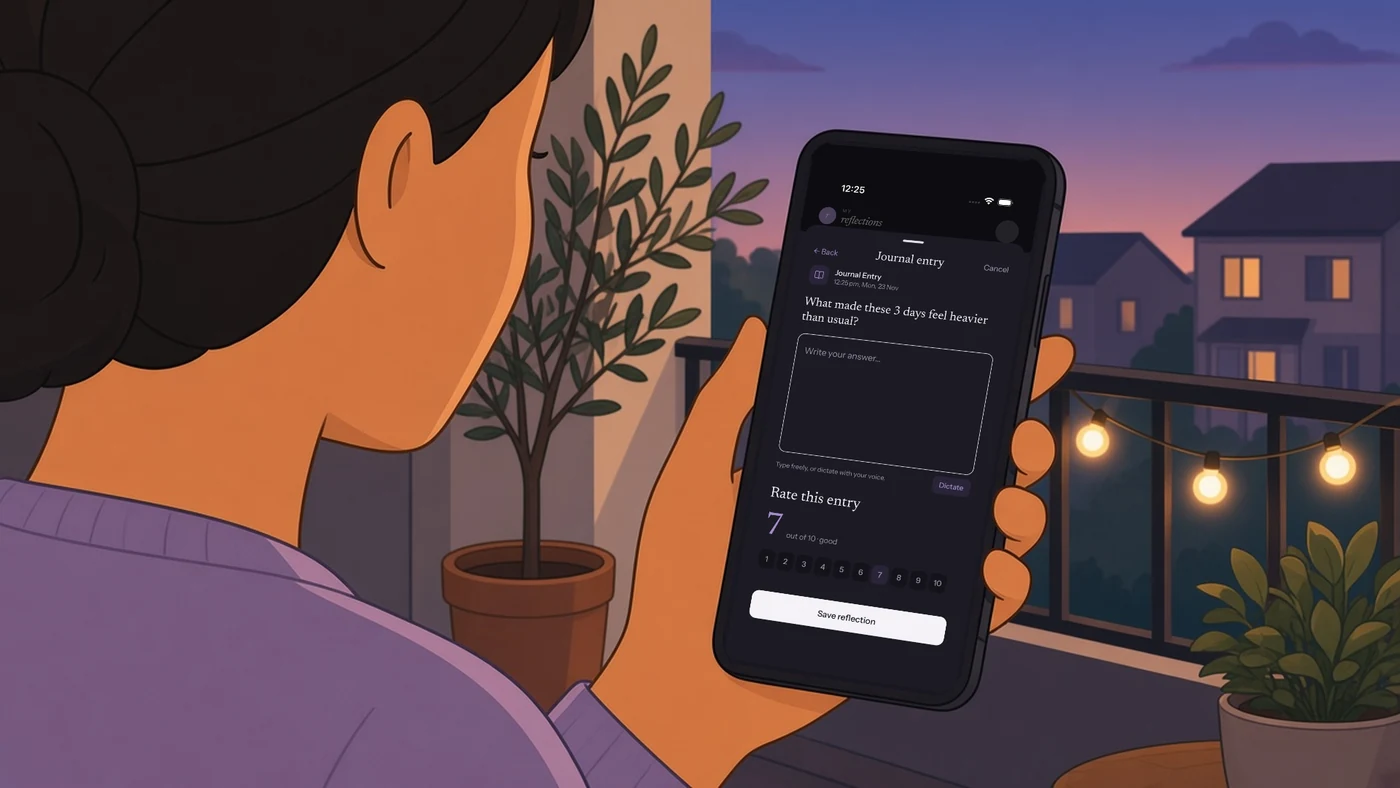
Dismiss closes the card. Choosing Write about it, or Dismiss, keeps Today quiet for 14 days. Another stretch in that window stays on the chart and off the card. The mark you already have stays tappable.
Open the same mark on Insights
Insights uses the same 30-day line. Tap the marked run.

The detail names the dates, how many of those days sat clearly above or below your usual, and what that usual is. The short explanation matches the rule: a run that is unusual for you. A single dip stays out. A flat streak of eights stays out. Another person’s ratings stay out.
Write about it is on that screen too. Not now closes the detail and leaves the chart as it was. Closing it does not dismiss the prompt on Today.
With fewer than two rated days on the chart, you still see the quiet placeholder: complete more reflections to see trends.
Also in 3.0.3
That reading is the whole release. The 3.0.3 notes list no separate fixes.
My Reflections is a reflection journal, not therapy or medical advice. Your entries stay private by default; you choose what to share.
Questions? Visit Support or Get the app.
Try the two-minute version tonight.
Reflecting is free, on iPhone, Android and the web. Professional has a 7-day trial.
Get the appKeep reading

Product news
Hold yourself to it: video reflections and daily prompts in 3.0.2
Record a promise to yourself, then watch it back and see how far you've come. Video reflections and daily prompts arrive in 3.0.2.

Product news
My Reflections Is Back: Now on Web, iPhone and Android
My Reflections has relaunched on web, iPhone and Android. Chris, the founder, shares why we rebuilt the app and what's coming next for Reflectors.