
What this is about
Life demands that we adapt our behaviour and responses continuously in situations that we find ourselves. More often than not, our actions in these situations are determined both consciously and subconsciously as a culmination of our experiences, emotions and knowledge. The same can be said for the way that we communicate, both verbal and written. This is exactly the reason that when I know that I am feeling under pressure or have a lot going on, I will always re-read my communications before hitting send: too often in the past I have sent an email that came across as passive-aggressive or frustrated because I had other things on my mind when I sent it.
When we adopt a process of reflection that includes documenting situations, actions, and results; sentiment can indicate a subconscious attitude or emotion towards the subject matter or simply be an expression of other pressures and influencing forces that may affect your decision-making process.
Interestingly, research indicates that subconscious responses to situations not only impacts the way that we communicate or discuss the results, but the way that we learn from them: all of this without us even realising that we are being influenced!
So answering the question posed in this article; “What does sentiment analysis have to do with effective self-reflection?”: the answer is that sentiment analysis provides additional insights into your subconscious emotions and their influence on your decisions that may shift your observations and reflections of your activities and tasks. The analysis may explain why you made the decisions that you did, even in situations where retrospectively you would have made a different choice.
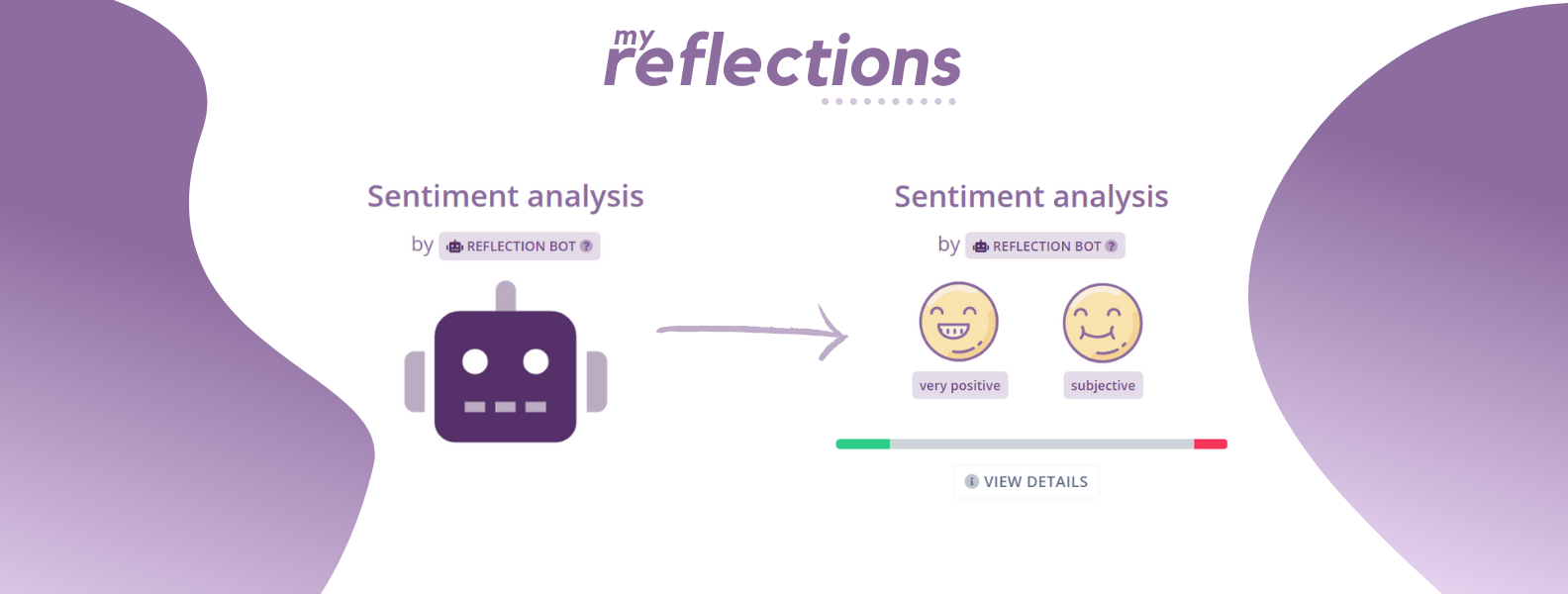
With all of this in mind, My Reflections runs sentiment analysis on your reflections and weekly deep dives that can then be used as part of your reflection session to determine highlights/lowlights and the required adjustments you need to make to be more effective.
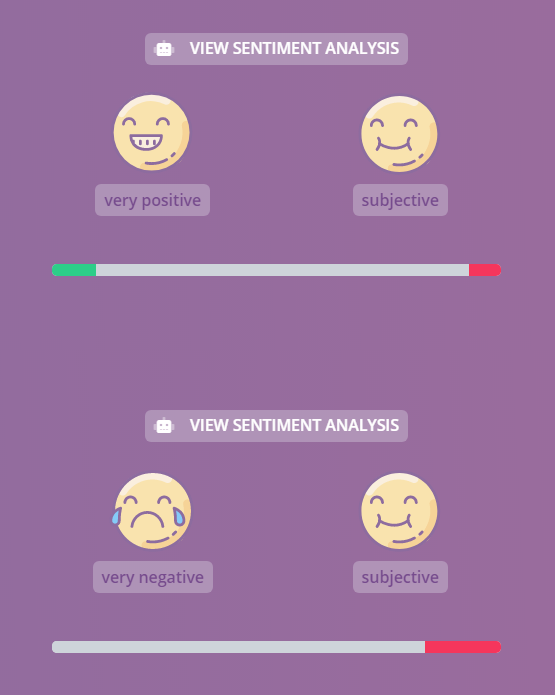
This information is presented as a simple visualisation of “polarity”: ranging from very negative through to very positive, “subjectivity”: subjective vs objective and a chart highlighting positive vs neutral vs negative language tags identified through the analysis.
Additionally, when viewing the reflection details you can also drill into the specific phrases and their analysis results for even more granular evaluation if required.
As they say: knowledge is power, and this is true within the context of our reflections; the more knowledge we have that we can directly associate with our decisions: the better we will be able to reflect and learn from the outcomes of those decisions.
What do you think? Do you think that understanding the sentiment of your reflections is likely to change the way that you reflect or influence the results?
Try the two-minute version tonight.
Reflecting is free, on iPhone, Android and the web. Professional has a 7-day trial.
Get the appKeep reading

Product news
Free to reflect, Professional to lead the room
Unlimited core reflections on Free. Photo journals, groups you create, and schedules on Professional, with a seven-day trial.

Product news
Native My Reflections: Today, Insights, Capture
The same AOR model with less friction: streaks and trends on Today, deep dives under Insights, capture in a few taps.